
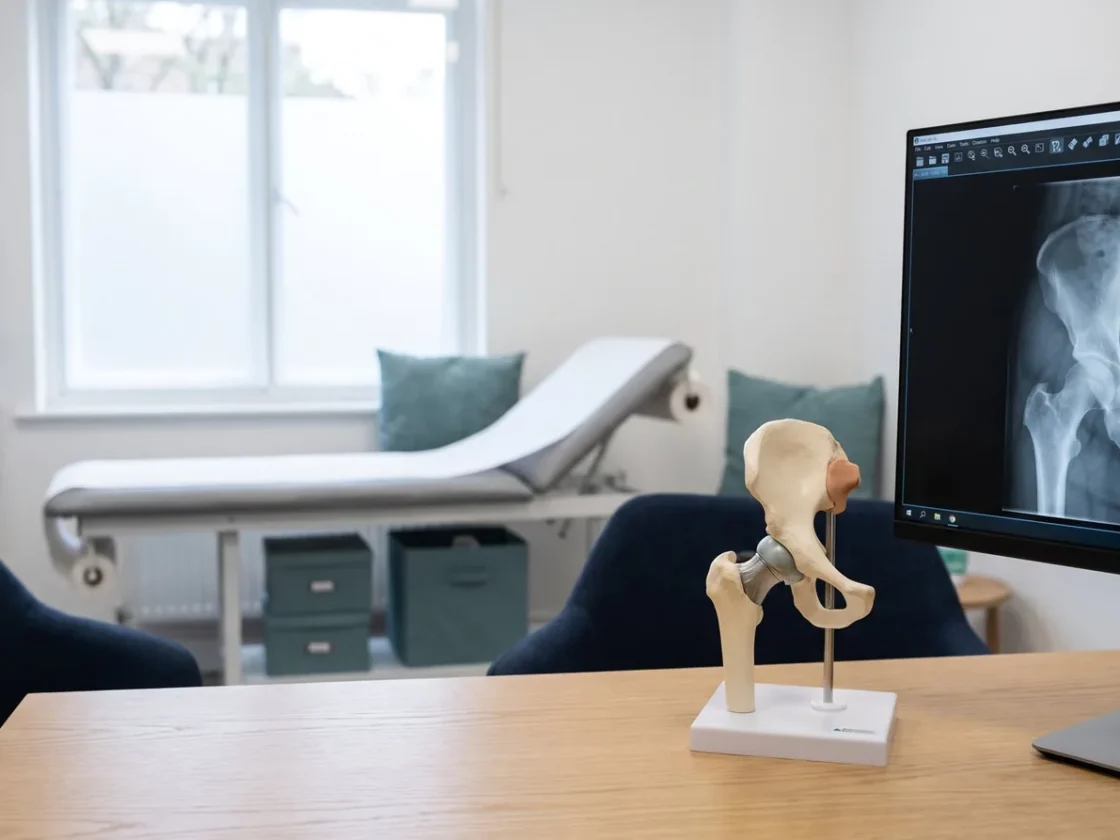
What is hip arthritis?
The hip is a ball-and-socket joint. In arthritis, the cartilage covering the ball and socket thins and roughens, so the bones no longer glide smoothly. This causes pain, stiffness and, over time, a change in how you walk.
Arthritis often develops gradually. Some people have symptoms for years that come and go; for others, pain builds more quickly. How much it affects daily life varies a great deal, which is why treatment is always tailored to you.
Common symptoms
- Pain in the groin, buttock or thigh, sometimes felt in the knee
- Stiffness, especially first thing in the morning
- Difficulty putting on shoes and socks
- A limp, or pain that limits how far you can walk
- Pain at night or when resting

Causes and risk factors
Hip arthritis is more common with age, but it can also follow childhood hip problems, previous injuries or hip impingement. A family history of arthritis and higher body weight can increase the load on the joint.
How it’s diagnosed
01
Consultation
A detailed history of your symptoms and how they affect you.
02
Examination
Assessing movement, strength and how you walk.
03
Imaging
An X-ray, and occasionally an MRI scan, to confirm the diagnosis.
Treatment options
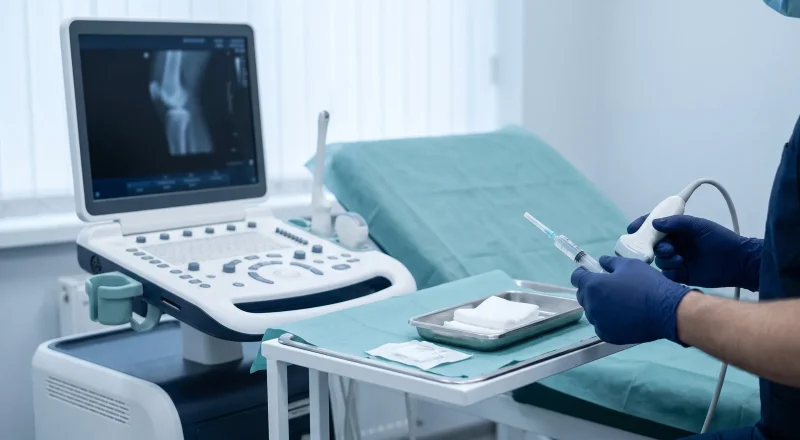
Treatment usually starts with the simplest option that controls your symptoms. Surgery is considered when pain and stiffness are affecting your quality of life despite other measures.


Living with hip arthritis
Staying active, keeping muscles strong and managing your weight can all reduce symptoms. If you do need surgery, being as fit as possible beforehand helps your recovery.