What is robotic-assisted surgery?
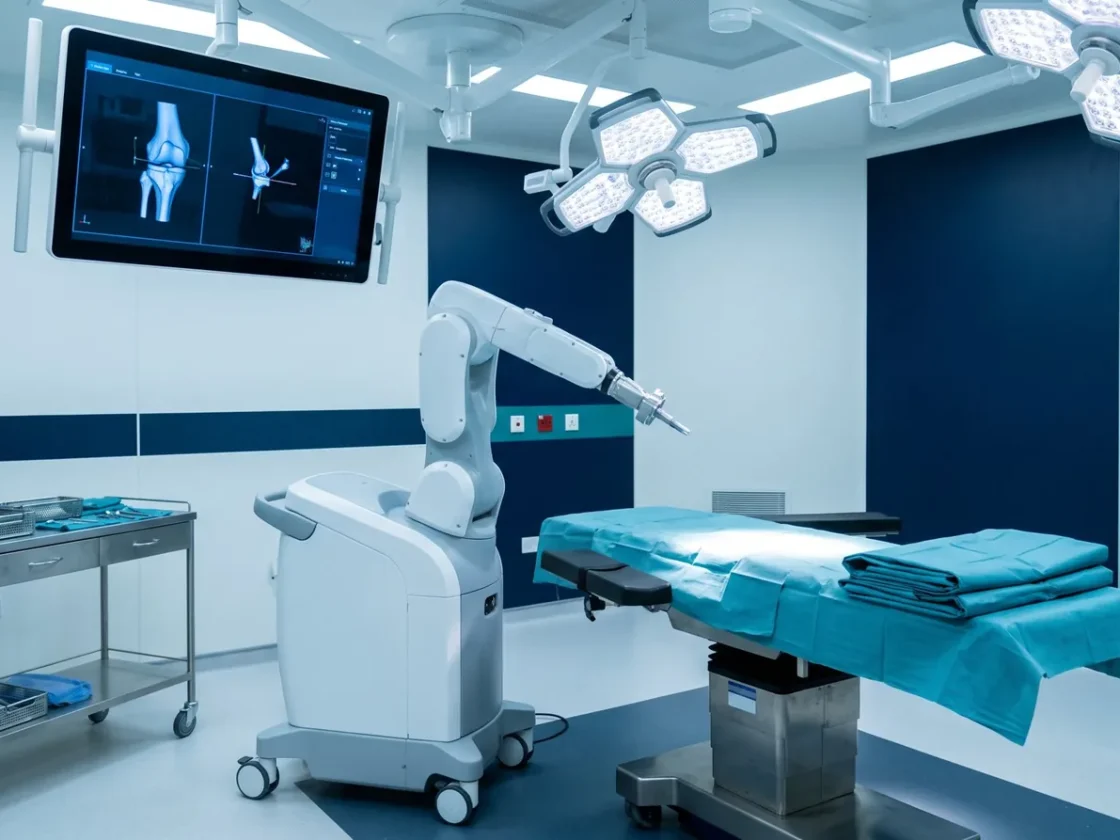
In robotic-assisted surgery, a computer system and a robotic arm help the surgeon carry out a joint replacement. The system is used to plan the size and position of your new joint, and the robotic arm then helps keep the instruments within that plan during the operation.
The robot does not operate on its own. Mr Hakimi carries out every step and is in control of the robotic arm at all times.
How it works
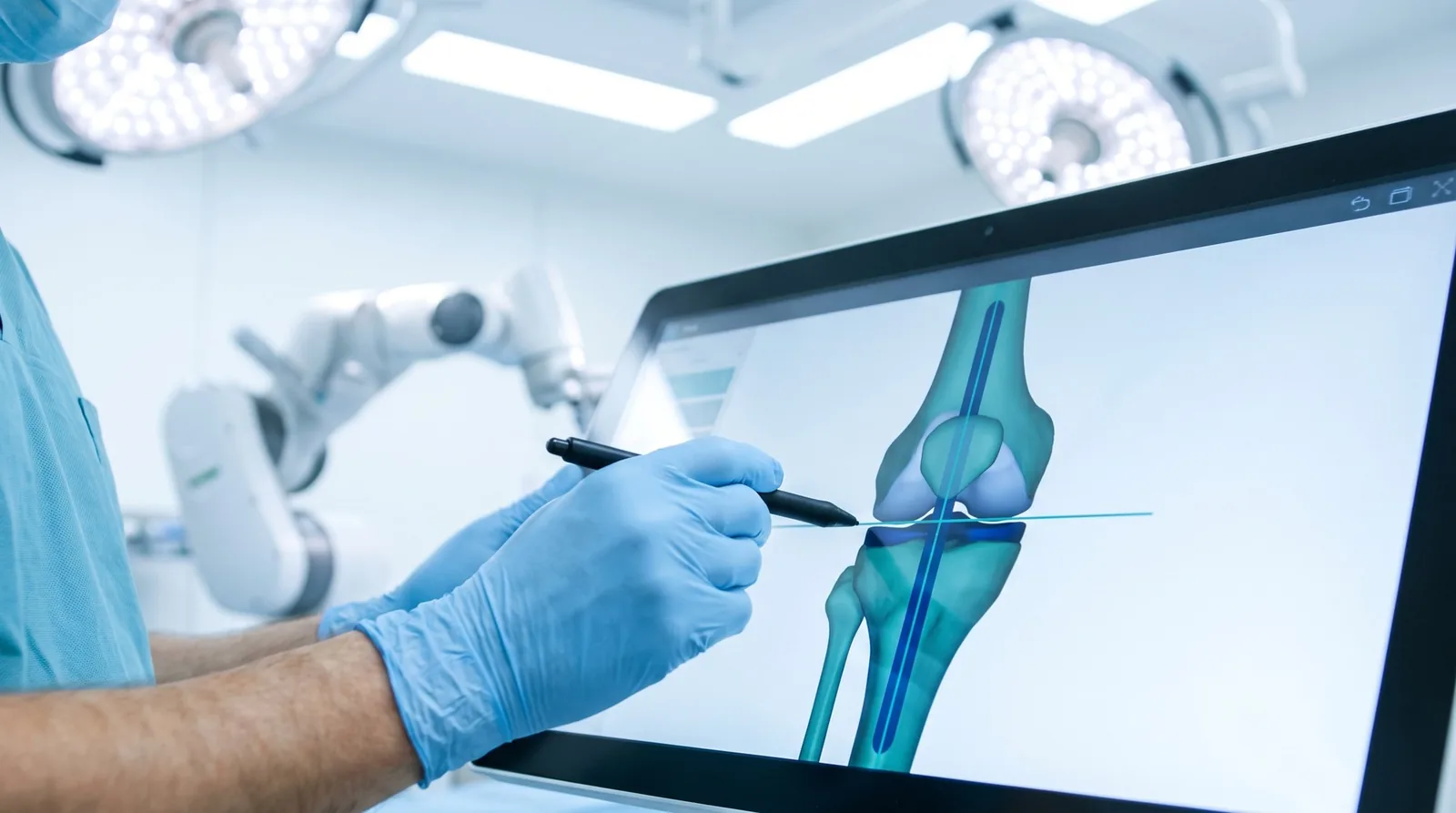
- Before or during surgery, the system builds a plan of your joint
- Mr Hakimi uses the plan to choose the size and position of the implant
- The robotic arm helps him prepare the bone within the planned limits
- The movement and balance of the new joint are checked before the operation is finished
Who is it for?
Robotic-assisted surgery may be an option if you are having a joint replacement at a hospital that has the technology. It isn’t suitable for everyone, and conventional surgery remains a well-established choice.
Mr Hakimi will advise you based on your joint, your anatomy and any previous surgery, and will explain the alternatives so that you can decide.
Robotic-assisted and conventional surgery
Conventional joint replacement
- Planned from your X-rays and checked during the operation
- The bone is prepared using hand-held guides and instruments
- Mr Hakimi operates throughout
Robotic-assisted joint replacement
- A computer plan of implant size and position is made for your joint
- A robotic arm keeps the instruments within the planned limits
- Mr Hakimi operates throughout and controls the robotic arm
The implants, anaesthetic, hospital stay and rehabilitation are the same. Both are established ways of carrying out a joint replacement, and studies are still comparing their long-term results.
Your recovery, step by step
Recovery follows the same steps as any joint replacement. Everyone recovers at their own pace; these timings are a general guide, not a promise.
- Day 1Walking with a frame or crutches
- 1–3 daysHome, with an exercise plan
- 6 weeksWalking without aids for most people
- 3 monthsBack to most normal activities
- 1 yearReview appointment
Risks
Robotic-assisted joint replacement carries the same risks as any joint replacement, including infection, blood clots, stiffness, and wear or loosening over time. Some systems use small pins placed in the bone to guide the robotic arm, which can occasionally cause soreness at the pin site. Occasionally the technology cannot be used on the day, and the operation is then carried out in the conventional way. Your individual risks will be discussed in detail before you decide.