
Hip surgery

Total hip replacement

A hip replacement removes the worn ball and socket of the hip and replaces them with an artificial joint. For people with advanced arthritis, it can relieve pain and make everyday movement easier.
  • Hospital stay: usually 1–3 nights
  • Usually walking within a day
  • Self-pay or insured
The parts of a hip replacement implant

Who is it for?

A hip replacement is usually considered when arthritis or another hip condition causes pain and stiffness that affect your sleep, work or daily activities, and non-surgical treatments are no longer helping enough.

Mr Hakimi will talk you through the benefits and risks for you personally, and whether other options are worth trying first.

What the operation involves

  • Carried out under a spinal or general anaesthetic
  • The damaged ball and socket are replaced with metal, ceramic or polyethylene parts
  • The operation usually takes one to two hours
  • Most patients stand and walk with support on the day of surgery or the next day

A modern orthopaedic operating theatre

Your recovery, step by step

Everyone recovers at their own pace. These timings are a general guide, not a promise.

  1. Day 1Walking with a frame or crutches
  2. 1–3 daysHome, with an exercise plan
  3. 6 weeksWalking without aids for most people
  4. 3 monthsBack to most normal activities
  5. 1 yearReview appointment

Risks

Hip replacement is a common and well-established operation, but like any surgery it carries risks. These include infection, blood clots, dislocation, leg-length difference and wear or loosening over time. Your individual risks will be discussed in detail before you decide.


FAQs

Questions about hip replacement

How long does a hip replacement last?

Most modern hip replacements last many years. Mr Hakimi will explain what to expect for your age, activity level and the implant used.

When can I drive after surgery?

Most people can drive again after about six weeks, once they can control the car safely and perform an emergency stop. Check with your insurer before you drive.

Will I need physiotherapy?

Yes. A physiotherapist will see you in hospital and give you an exercise programme to follow at home.

Can both hips be done at the same time?

Sometimes. It depends on your general health and the condition of each hip. Mr Hakimi will discuss whether this is suitable for you.

Request an appointment

Ready to talk about your hip?

Appointments at the Alexandra, Spire Manchester, Highfield and Oaklands hospitals, or by video. Self-pay and insured patients welcome.

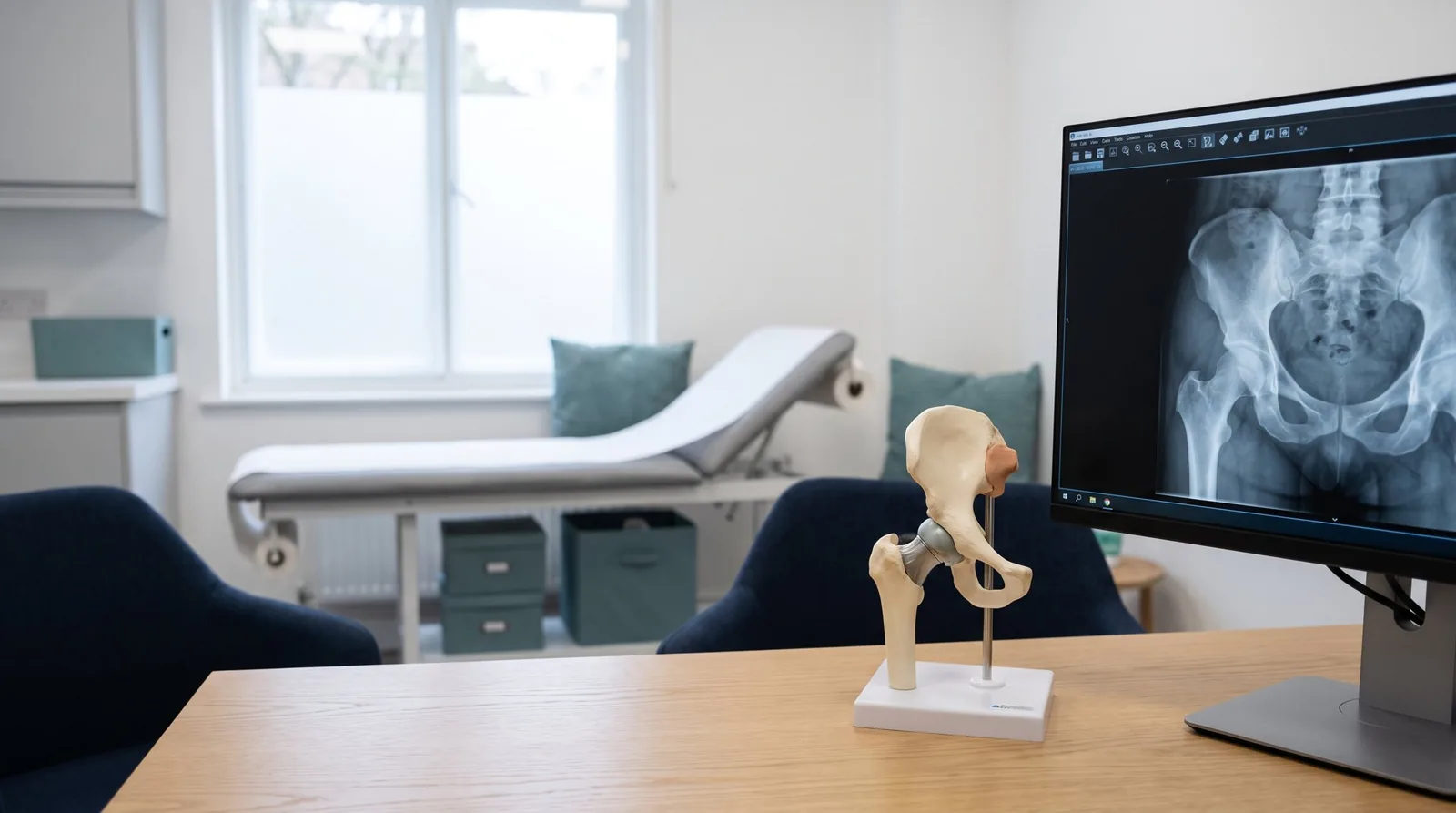
Consulting room with a hip X-ray on screen and a model of the hip joint